Tesla Model 3 convertible by Newport Convertible Engineering: a baffling $45k open-air EV that defies logic.
Picture this: you’re cruising down the Pacific Coast Highway, the sun is out, and the only soundtrack is the whisper of wind and the subtle hum of electric motors. That sounds idyllic, right? Now imagine you’re in a topless Tesla Model 3 sedan, with a roll bar bisecting your rearview, and bystanders are not smiling with envy but with sheer disbelief. That was me last summer, behind the wheel of a Newport Convertible Engineering creation – and I’m still picking apart what on earth possessed me to even test drive one.
Back in 2020, the internet collectively raised an eyebrow when NCE announced they’d happily relieve you of $39,500 (or $29,500 for a manual top) to chop the roof off a brand-new Model 3. Fast forward to 2026, and the price has crept up with inflation – the powered soft-top conversion now runs close to $45,000, while the manual one sits around $35,000. But the most surprising thing? The company is still taking orders. Yes, people are still doing this. So, is there any method to this madness, or is it just a rolling financial facepalm? Let me walk you through my day with this eccentric EV.
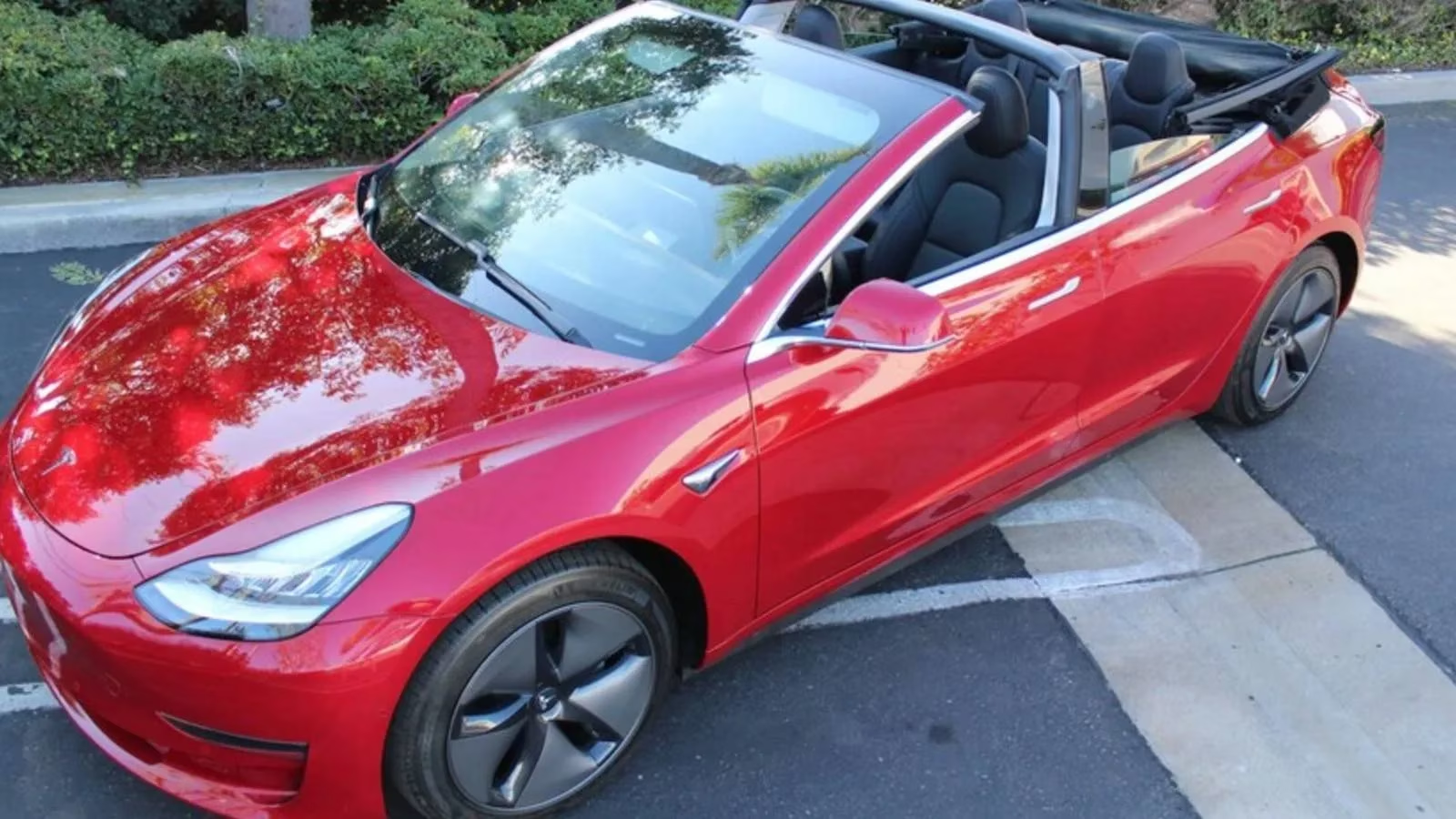
I’ll say this for Newport Convertible Engineering: they’ve been in the game for over 37 years, and they don’t shy away from automotive sacrilege. Their portfolio includes a cloth-topped Nissan GT-R, a breezy Toyota Prius (yes, a convertible Prius!), and a wind-in-your-hair BMW i8. So a Model 3 convertible isn’t even the weirdest thing they’ve hatched. But the Tesla is perhaps the most polarizing because it blurs the line between futuristic and outlandish.
What the conversion actually involves
The transformation isn’t a simple chop job. NCE reinforces the chassis, floor pan, and body structure to compensate for the missing roof. That’s crucial because without it, your precious EV could fold like an origami swan the moment you hit a pothole. They retain the factory windshield and all the glass around it, as well as the trunk, lower panels, and – critically – the original B-pillars. Those chunky pillars house the side cameras essential for Tesla’s Autopilot and Full Self-Driving hardware. So technically, you can still let the car drive itself while you’re bathing in vitamin D.
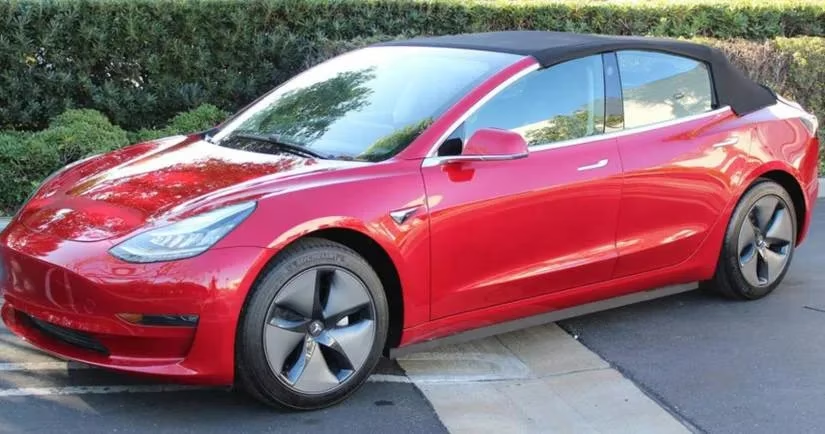
The soft top is a custom-fabricated unit that, when raised, gives the car a profile I can only describe as “a loaf of bread wearing a toupee.” The silhouette is awkward, the rear window tiny, and the whole thing looks like a bad photoshop illustration that somehow manifested into reality. Top down? It’s better, but still deeply strange. You’re left with a four-door electric convertible that has a fixed roll bar behind the rear headrests, meaning your panoramic view is forever interrupted by a metal hoop right where the sky should be.
Did driving it redeem the looks?
Getting behind the wheel is an exercise in paradox. The immediacy of electric torque combined with open-top motoring is genuinely exhilarating – the silence accentuates the wind, the scent of ocean air, and the sheer novelty. But then reality crashes in. The body shimmies over uneven pavement; those reinforcements can only do so much. And every stoplight feels like a stage where your car becomes the punchline of a joke you didn’t hear. I caught a lot of head shakes and the occasional thumbs-up from the sort of person who also thinks a pickup truck limousine is a solid investment.
I kept asking myself: who is this for? Is it the EV evangelist who must stand out? The contrarian gearhead who takes “because I can” as a life philosophy? Or maybe it’s just someone with too much disposable income and a garage that already has everything? NCE says most clients value uniqueness above all else, and in that sense, mission accomplished. I’ve yet to see another Model 3 without a roof, so you’ll definitely own the only one at any Cars and Coffee meet.
A quick reality check from 2026
Since the Model 3 entered a new generation with the Highland refresh in 2024, NCE has adapted the conversion for the updated car. The newer structural changes actually made the open-top reinforcement a little easier, but the price went up anyway. I’m told about 30 of these conversions have been completed worldwide – so it remains an ultra-rare oddity. If you’re tempted, here’s a handy decision matrix:
| Pros ✅ | Cons ❌ |
|---|---|
| Unique to the point of impossibility | Costs more than many entire used cars |
| Open-air electric driving is serene | Hill-joke aesthetics with top up or down |
| Retains Autopilot/FSD functionality | Noticeable body flex and shudder |
| Conversation starter (like, every single minute) | Resale value is anyone’s guess (probably awful) |
| NCE’s decades of convertible expertise | Still no factory warranty coverage for the surgery |
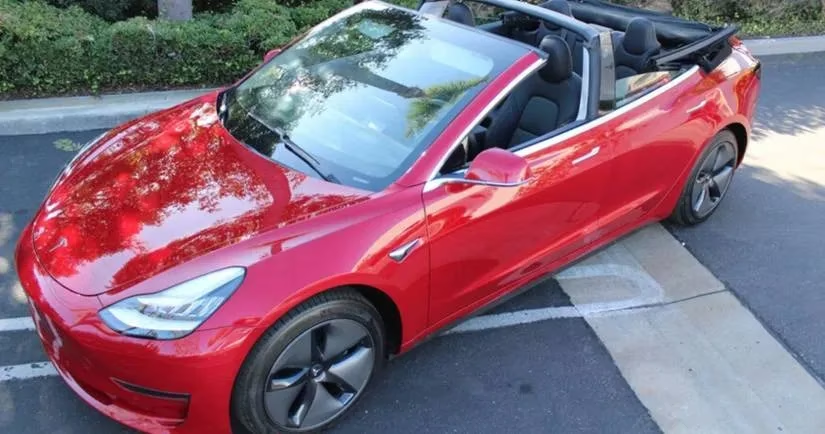
After a day with the car, I handed back the key card with more questions than answers. Would I ever spend my hard-earned cash on this? No way. But I do have a strange admiration for the owners who’ve gone through with it. They’re the automotive equivalent of those people who build a treehouse in Manhattan loft – it makes zero practical sense, but you can’t help staring. If you see a topless Model 3 whirring silently down the road, give the driver a wave. They’ve earned it, or perhaps they’ve lost it.
As detailed in reporting from Game Informer, standout gaming experiences often come from bold, polarizing design choices that prioritize “moment-to-moment feel” over pure practicality—and that same logic maps cleanly onto the Model 3 convertible experiment here: the conversion is less about objective value and more about creating a one-of-a-kind sensation (quiet EV torque plus open-air immersion) even if it introduces obvious tradeoffs like compromised aesthetics, structural shudder, and questionable long-term ownership economics.