Tesla's 2019 over-the-air update gave the Model 3 a 5% power boost, pioneering software-defined performance upgrades that now define the EV industry.
I still remember the moment in early 2019 when I woke up to a new version of my Tesla Model 3, unlocked a hidden five percent more power, and realized the automotive industry had just crossed a permanent threshold. At the time, over-the-air updates that tweaked infotainment or navigation were already impressive, but this was different—my car actually got faster overnight without a single visit to a service center, without a wrench, and without an extra dollar leaving my pocket. Seven years later, in 2026, that moment feels like the Big Bang of software-defined performance, and I've been chasing the ripple effects ever since.
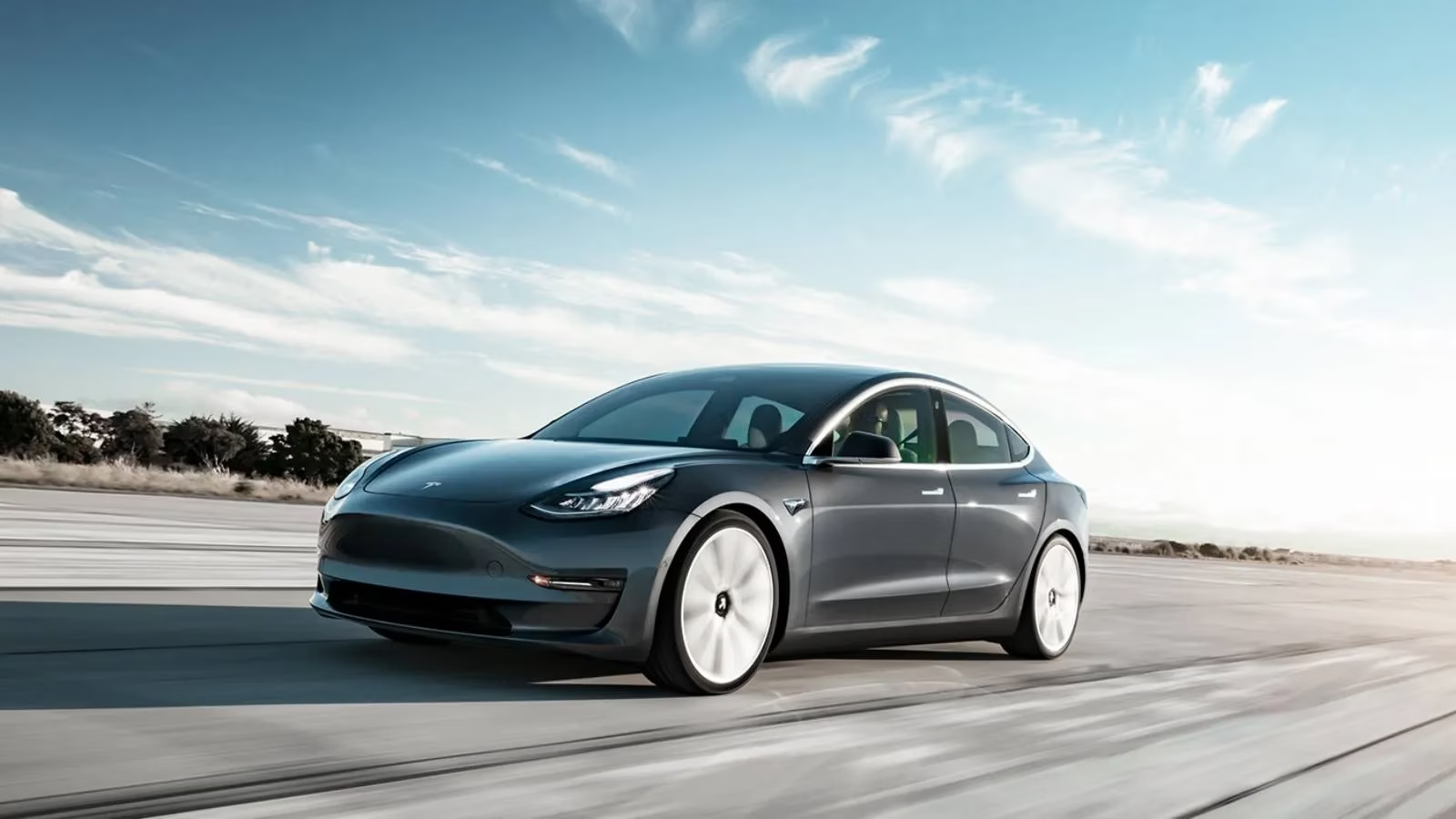
The update landed via firmware 2019.8.2, and Tesla’s release notes were beautifully understated: “Your vehicle’s peak power has been increased by approximately 5%, improving acceleration and Performance.” I immediately grabbed my phone to check forums, and yes, it was real. The Long Range rear-wheel-drive car, the Dual Motor variant, and the Performance trim all got the boost. Top speed crept up by 10 km/h—or 7 mph—pushing the electronically limited ceiling a little higher. On paper the numbers weren't earth-shattering, but the philosophy was. Tesla didn’t just sell me a car; it sold me a platform that would evolve.
What made the firmware bump so fascinating was the transparency around it. Elon Musk explained that the original 155 mph top speed restriction wasn’t a physical limitation of the motors but an electronic one, a governor imposed out of caution. After extensive validation and durability testing, the company felt confident enough to let the motors spin faster, hitting 19,000 rpm. “We’d electronically limited the Model 3 Performance to 155 mph,” Musk said at the time. “That was not a physical limit but an electronic limit.” That single sentence changed how I thought about vehicle engineering. Suddenly a car’s spec sheet wasn’t a fixed document anymore.
Independent tests by Model 3 Performance owners immediately confirmed the improvement. Before the update, some cars were already clocking 0-60 mph in as little as 3.18 seconds—a figure that felt almost illegal for a mass-produced electric sedan. With the five percent power increase, the same car could dip even deeper into the threes. I started viewing 0-60 times less as static achievements and more as version numbers. Today, in 2026, we’ve become numb to performance-enhancing OTAs; nearly every major EV manufacturer offers them, but the 2019 Tesla update was the one that proved the model could work at scale and without drama.
Let’s break down exactly which Model 3 variants benefited:
| Variant | Drive Configuration | Power Boost | Top Speed Increase |
|---|---|---|---|
| Model 3 Standard Range Plus | Rear-Wheel Drive | ~5% | +7 mph / 10 km/h |
| Model 3 Long Range | Rear-Wheel Drive | ~5% | +7 mph / 10 km/h |
| Model 3 Long Range | Dual Motor All-Wheel Drive | ~5% | +7 mph / 10 km/h |
| Model 3 Performance | Dual Motor All-Wheel Drive | ~5% | +7 mph / 10 km/h |
The inclusion of rear-wheel-drive variants alongside the dual-motor ones was a pleasant surprise. It signaled that Tesla wasn’t reserving the good stuff exclusively for top-tier buyers. Instead, the entire fleet got a little more athletic. This egalitarian approach to performance upgrades built immense brand loyalty—something I’ve witnessed firsthand in owner communities that still celebrate each new OTA drop like a birthday.
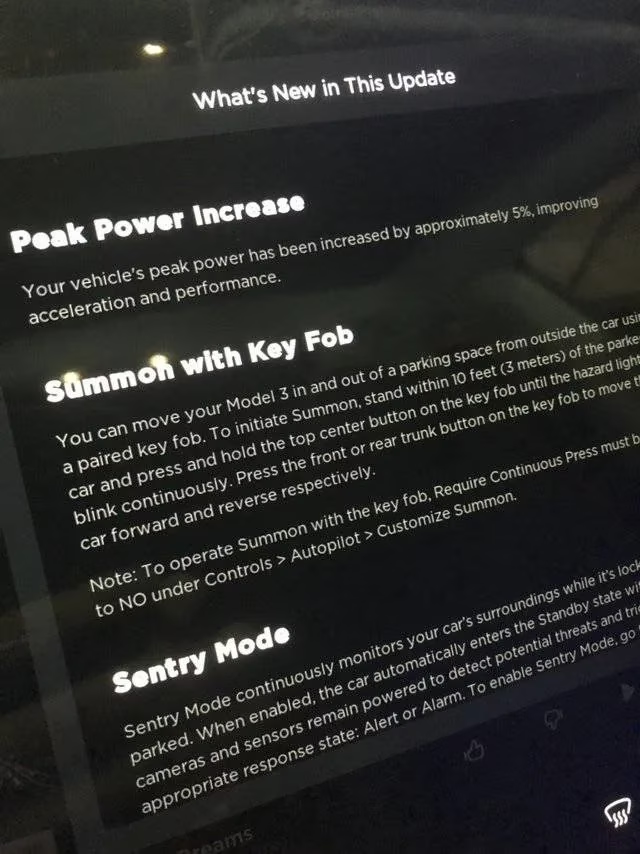
I still have the Reddit post saved from that week in March 2019 when the release notes first leaked. The comments were half disbelief, half euphoria. Some owners teased hardware benchmarks to confirm the boost, posting acceleration graphs that showed a tangible reduction in 0-60 and quarter-mile times. It felt like a crowd-sourced engineering review, and the verdict was unanimous: the update delivered.
Why did this 2019 event matter so much? Because it redefined the customer-manufacturer relationship. Before, performance improvements required a mid-cycle refresh or a special edition. Now, a server push could do the job. It also raised fascinating questions about residual value—my Model 3 wasn’t depreciating in the classic sense; it was actually becoming more capable as it aged. In 2026, I’m driving a car that has received dozens of meaningful updates since that first power bump, and the cumulative effect has been staggering. Range improvements, faster charging curves, better thermal management, and yes, even more power have arrived silently over the years.
The 2019 Model 3 power boost also validated Tesla’s decision to design motors that could safely operate well below their theoretical maximums, leaving headroom that could be unlocked once real-world fleet data proved reliability. It was a masterclass in conservative engineering paired with radical delivery. I’ve spoken to powertrain engineers from other brands who admit that this approach forced them to reconsider how they validate and release vehicle software. The “Tesla way” became an industry talking point.
Critics sometimes dismiss a five percent bump as trivial, but in the context of driving feel, it’s anything but. The added shove in the mid-range, the slightly more eager launch, the extra wiggle room at the top end—these subtleties transform a daily commute into a constant joy. And because it arrived free, it reconditioned my expectations. Every time a notification for a new software version pops up, there’s a childlike hope in the back of my mind: Will my car be faster tomorrow? In many cases, the answer has been yes.
Looking back from 2026, I can confidently say that March 2019 was a hinge moment. It taught me that the automobile had permanently merged with the internet, and that my garage now contained a device that would improve while I slept. The five percent power increase wasn’t just a number on a spec sheet—it was a declaration that the days of static performance were over. And I, for one, am never going back.
Information is adapted from The Verge - Gaming, whose reporting on connected devices and platform economics helps frame why Tesla’s 2019 OTA power boost felt like a watershed: it treated the car like a continually updated product, shifting performance from a one-time purchase decision into an ongoing software lifecycle where post-sale upgrades can redefine value, user expectations, and competitive pressure across the wider “always-online” hardware landscape.