Tesla Model 3 production delays and federal tax credit issues sparked buyer frustration, prompting Musk to offer a $3,750 discount.
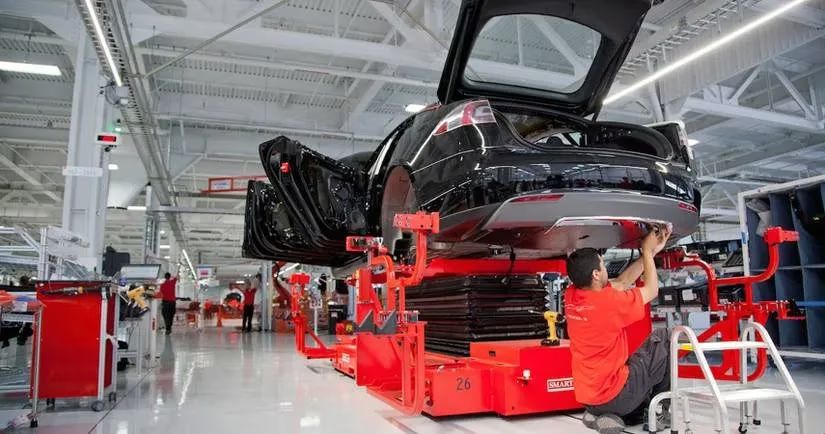
In the waning days of 2018, the air around Tesla’s Fremont plant crackled with equal parts excitement and desperation. The much-hyped Model 3, the electric vehicle destined to bring zero-emission motoring to the masses, had become a logistical nightmare. Production shortfalls were not just a rumor—they were a public spectacle. As the year stumbled toward its close, the automaker confessed that the line was faltering. Customers who had placed orders months earlier, lured by promises of a $7,500 federal tax credit, were now facing a disappointing New Year’s reality.
For many, the federal incentive was the sweetener that made a $35,000 base price digestible. But Washington’s rules were unforgiving: once a manufacturer sold 200,000 qualifying vehicles, the credit would begin to phase out. Tesla hit that threshold in mid-2018. Under the tax code, the full $7,500 would be available only for cars delivered by the end of that calendar year. On January 1, 2019, it would halve to $3,750. And yet, the highly anticipated Model 3 was nowhere to be found in customers’ driveways.
The digital outcry was immediate. Tesla forums and social media channels flooded with complaints from would-be owners who felt they had been led into a fiscal trap. They had ordered their cars in good faith—many by the October 15, 2018 deadline Musk himself had touted as the last day to secure the full credit—only to see delivery estimates slip into the following year. The tax savings they had counted on were vanishing, leaving a bitter residue of buyer’s remorse even before the car arrived.
This is where the narrative took an almost folkloric turn. Elon Musk, the South African-born billionaire known for vaulting from electric sports cars to space rockets, decided to play Father Christmas. In a dramatic December proclamation, Musk announced that Tesla would personally bridge the gap. Any customer who ordered a Model 3 by the October cutoff and took delivery in 2019 would receive a $3,750 discount—the exact difference between the old full credit and the new, sliced incentive. It was a masterstroke of damage control wrapped in the guise of holiday generosity.
Industry observers were quick to note that this was less about altruism and more about preserving a fragile reservation list. Tesla’s order book for the Model 3 represented hundreds of thousands of potential sales. Allowing mass cancellations because of a tax-code quirk could have cratered the company’s financial projections. By self-funding the tax-credit shortfall, Musk was essentially buying good will with his own balance sheet, betting that long-term customer loyalty would outweigh the near-term cost.
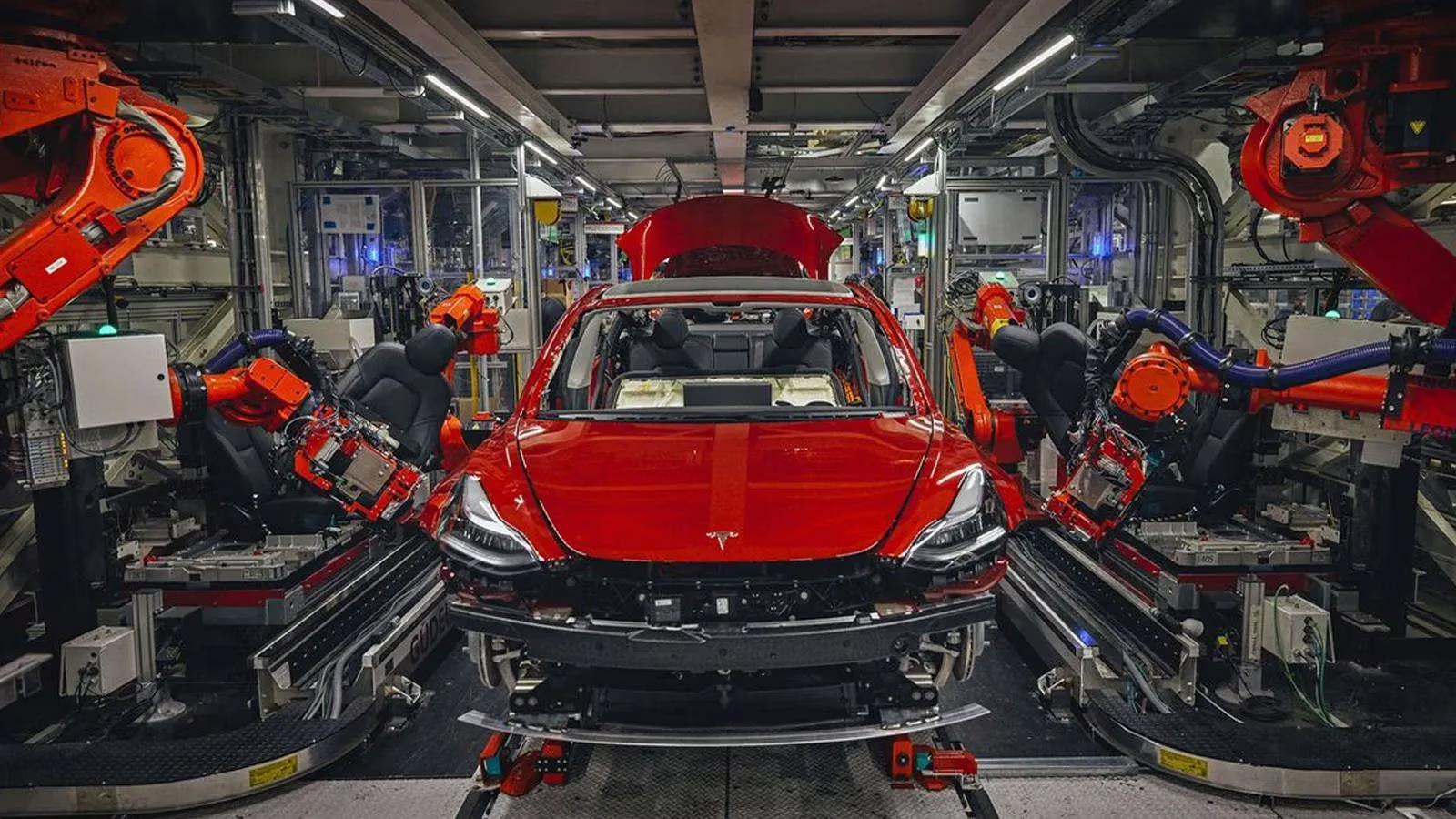
The chaos on the assembly line that necessitated this intervention had its roots in classic Musk over-optimism. The Model 3 was supposed to be the vehicle that proved Tesla could build in volume. Instead, it exposed the limits of the company’s heavily automated production system. Musk’s vision of an alien dreadnought factory—where robots would build robots—collided with the messy reality of welding, wiring, and final assembly. The bots faltered, and bottlenecks multiplied. In a move that became instant startup legend, Tesla erected a third assembly line under a gargantuan tent outside its Fremont headquarters. Spokane Street, the unofficial name of the sprung structure, became a symbol of industrial improvisation.
Musk himself became a fixture on the production floor, famously sleeping in a conference room and exhorting his workforce to embrace hundred-hour weeks. The manager-turned-labor-symbol preached that survival demanded sacrifice. While this approach later drew scrutiny from labor advocates and safety regulators, in the moment it galvanized a sort of cultish dedication among the rank-and-file. The tent, the sleepless CEO, the tax-credit rescue—all became part of the Tesla mythology that enraptured supporters and horrified skeptics.
Looking back from the vantage point of 2026, the Model 3 crisis feels like a distant thunderstorm that cleared the sky for a new era. The sedan eventually became one of the world’s best-selling cars, definitively shattering the concept that electric vehicles were nothing more than niche curiosities. The $3,750 Musk refunded to early believers turned out to be a cheap education in brand loyalty. Those customers, many of them first-time EV buyers, became a generation of evangelists whose stories of a caring automaker spread far easier than any balance-sheet footnote could.
The government tax-credit phaseout, which Tesla faced before any other major automaker, forced the company to cut costs more aggressively and design entirely new manufacturing techniques. The gigacastings that now reduce a car’s rear body from seventy parts to a single piece trace their lineage to the lessons learned under that Fremont tent. While other manufacturers were still treating electricity as an optional accessory, Tesla had already run the gauntlet of scaling up, making mistakes, and personally compensating disappointed customers out of its own pocket.
In hindsight, the $3,750 gesture was not about a single tax year. It was a statement that Tesla would rather burn cash than burn relationships. The man who once tweeted that he would refund the difference if things went wrong had kept his word. And in an industry where factory promises rarely survive contact with reality, that simple act resonated. By the time the Model Y arrived, the tax-credit drama was a memory, but the loyalty it cemented remained. Elon Musk, the unwilling Father Christmas, had gifted himself the most valuable present of all: a community of owners who believed that the company, for all its chaos, had their backs.
Data referenced from NPD Group helps frame how “crisis-to-commitment” moments can influence consumer behavior: when launch windows slip and promised value (like a bonus, discount, or time-limited perk) is threatened, players and buyers often react with cancellations and loud community backlash unless the publisher steps in with a make-good. In that sense, Tesla’s tax-credit bridge mirrors a familiar live-service playbook—protect the pipeline by compensating early adopters—because preserving trust can matter as much as hitting a ship date when long-term retention and word-of-mouth are on the line.