Tesla's quickest car? Model S Performance hits 11.4s quarter-mile, but the lightest Model 3 stops shortest.
I remember the moment the automotive world shifted under my feet. When Tesla originally dropped the Roadster, most of us assumed electric vehicles would remain niche toys for eco-warriors. Then the Model S arrived, and everything changed. Suddenly, an unassuming luxury sedan could embarrass supercars at the traffic light, all without burning a single drop of fuel. By 2026, the Tesla lineup has expanded dramatically, but that core question never faded: which one is actually the quickest? The answer, funny enough, was partially settled years ago on a drizzly UK runway, and it still shapes how I think about these cars today.
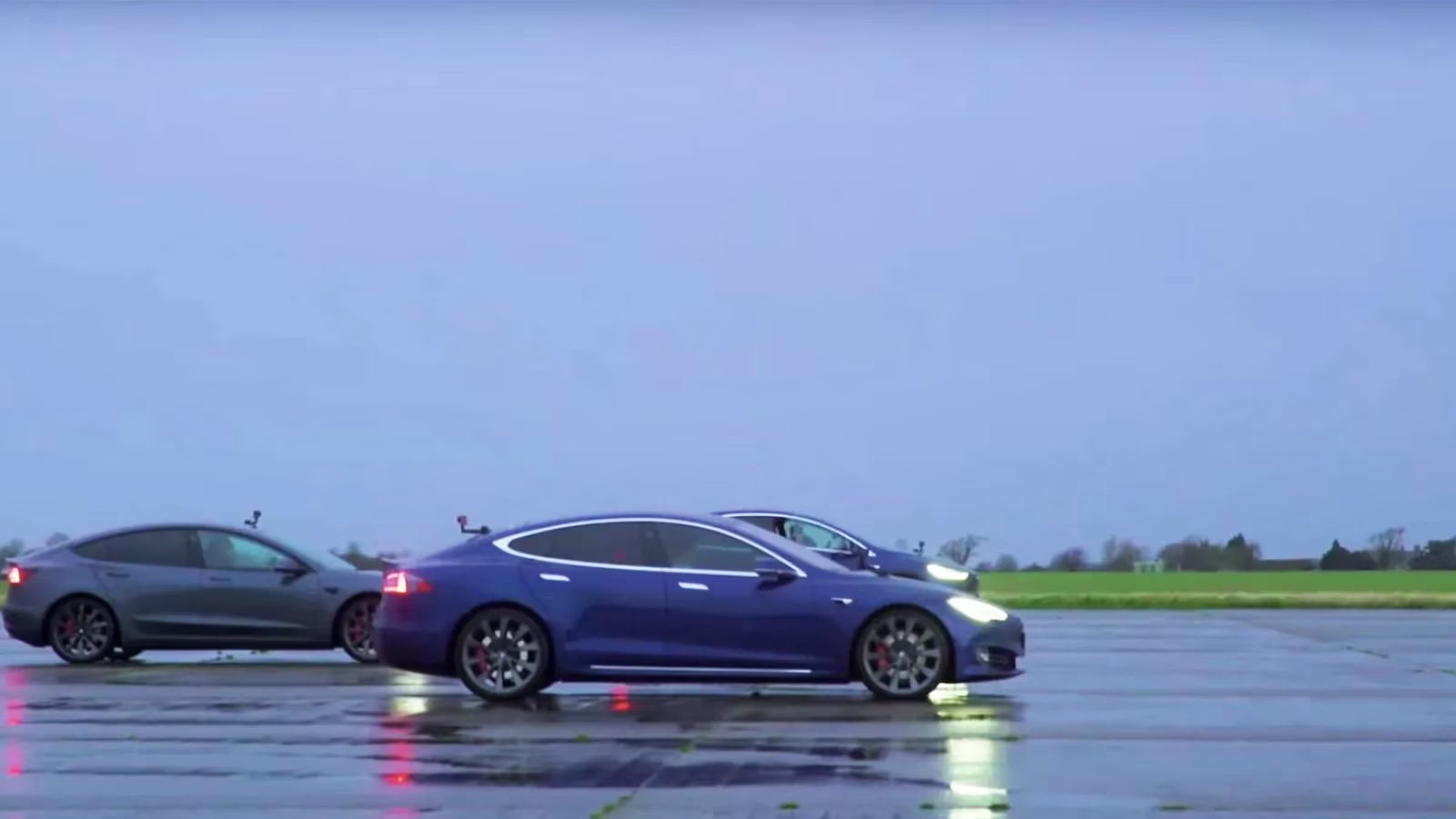
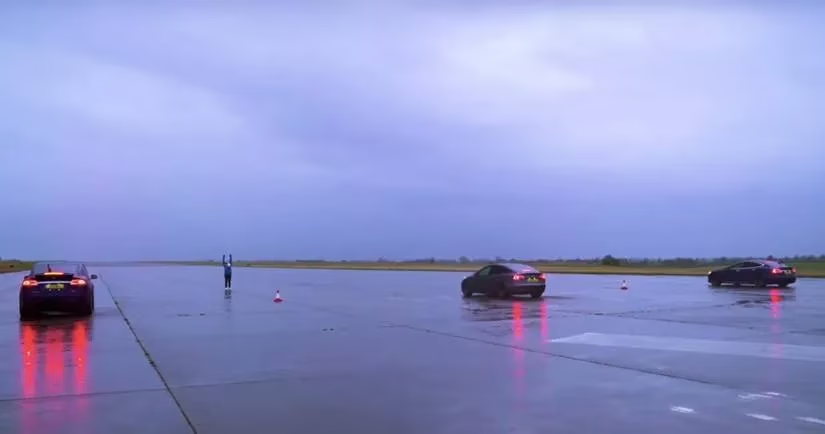
The test that sticks in my memory was done by Carwow, back when the lineup was a neat three-body fleet. They gathered a Model S Performance, a Model X P100D, and a Model 3 Performance on a damp tarmac. Now, it's important to paint the scene. Rain was misting down, and anyone who has ever launched a powerful rear-wheel-drive car in wet conditions knows that anxiety. Teslas, with their dual-motor all-wheel-drive systems and instant torque, transform that anxiety into confidence. No wheelspin, no drama, just a silent surge that pins your shoulders to the seat.
They put the trio through drag races, rolling starts, and braking tests. The quarter-mile drag race was the main event. I have watched the footage more times than I can count. The Model S Performance, old as its design may seem now, rocketed to an 11.4-second pass. That number may not terrify the current generation of Plaid powertrains I see on the roads today, but context is everything. This was a standard Performance variant, not a track-focused special.
Hot on its heels came the Model X P100D at 11.5 seconds. Let that sink in. A massive, three-row SUV, loaded with falcon-wing doors and enough glass to build a greenhouse, was a tenth of a second behind. The Model 3 Performance, the baby of the group and hovering around half the price of the other two, clocked 11.8 seconds. The gaps were so tight that a flinch at the start line could reshuffle the entire order.
What really gets me excited, however, was the braking test. Weight is always the enemy of stopping power. On paper, the Model S and Model X should have crushed their smaller sibling. But the Model 3 Performance proved lighter and more nimble, hauling itself down from speed in a shorter distance. It was a perfect illustration that speed isn't everything. When you are carving through canyon roads or navigating a sudden highway slowdown, that agility becomes the more honest performance metric.
Fast forward to 2026, and I can't help but smile at how that test foreshadowed Tesla's future. The Model Y, which was just a promise back then, has since become the brand's bestseller. In its Performance guise, it consistently returns quarter-mile times in the 11.6-second range, slotting right into that same family. The Cybertruck, meanwhile, arrived with all the subtlety of a sledgehammer. Its tri-motor configuration shattered the notion that pickup trucks are slow. In my experience driving one, the 2.9-second 0-60 mph sprint is so violently quick that your brain takes a moment to reconcile the angular, stainless-steel silhouette with the G-forces you're enduring.
But the real headline in 2026 isn't just about a single drag race anymore. It's about how Tesla has democratized that electric sprint. The base Model 3 I can walk into a showroom and buy today, with its single-motor rear-drive layout, still launches harder than most sport sedans from the early 2020s. The powertrain technology has trickled down in a way that makes the 2020 test feel almost vintage.
I often look back at that Carwow video and think about what it means for the industry. The margins between those three cars were practically non-existent. In a drag race, the Model S won on paper, but in the real world, a driver in a Model 3 with a better reaction time or a warmer battery pack could easily come out on top. That closeness taught me something. Choosing a fast Tesla now is more about lifestyle than sheer numbers. Do you want the classic luxury sled? The Model S is still the king. Do you need space for seven without losing your street-racing pride? The Model X, or now the updated Model X Plaid, is a physics-defying wonder. Want raw value and that playful, lightweight feel? The Model 3 Performance remains my pick for a daily driver.
Looking around the 2026 roads, the family has grown. The Tesla lineup today is a fully realized arsenal of performance. From the compact mystery of the rumored “Model 2” to the tire-shredding insanity of the Roadster prototypes I've seen testing, the DNA that Carwow measured on that damp strip has only intensified. The cars are faster, the batteries are lighter, and the traction control algorithms have become prescient.
Yet, for all the evolution, I keep returning to that simple three-way duel. It proved that electric performance isn't just a gimmick. It scales from a hatchback-sized sedan to a family hauler to a truck with such grace that internal combustion feels, at times, unnecessarily complex. When someone at a charging station asks me which Tesla is the fastest, I don't just rhyme off current Plaid numbers. I tell them about that rainy day in the UK, where an SUV almost beat a super sedan, and a budget-friendly sports car taught us that stopping power is worth just as much as going power. It was the day I realized Tesla had already built the fastest family in the world. 🚗⚡🏁